Build the recipe
Define the order of ingredient addition, dissolution requirements and initial mixing conditions.
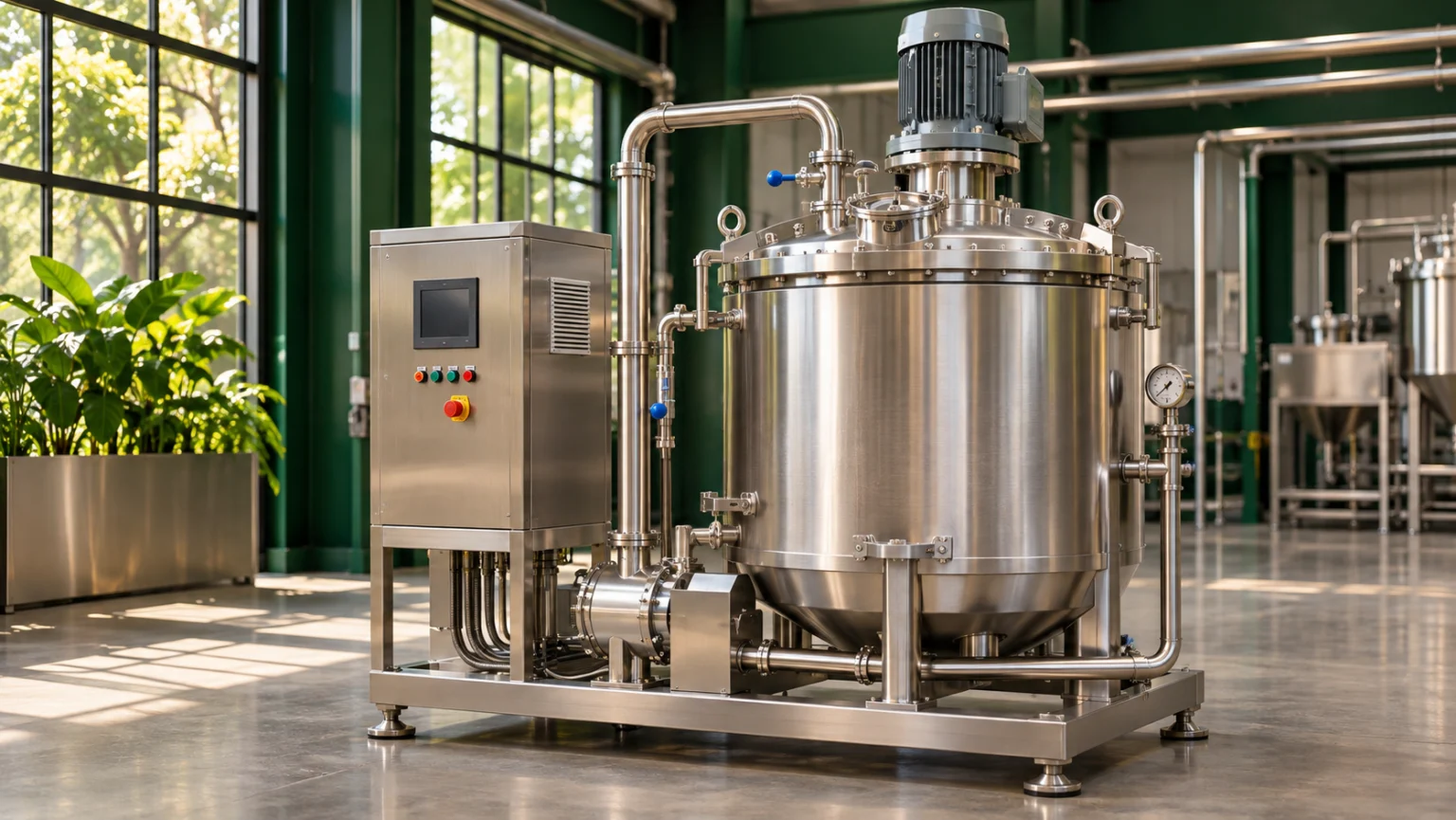
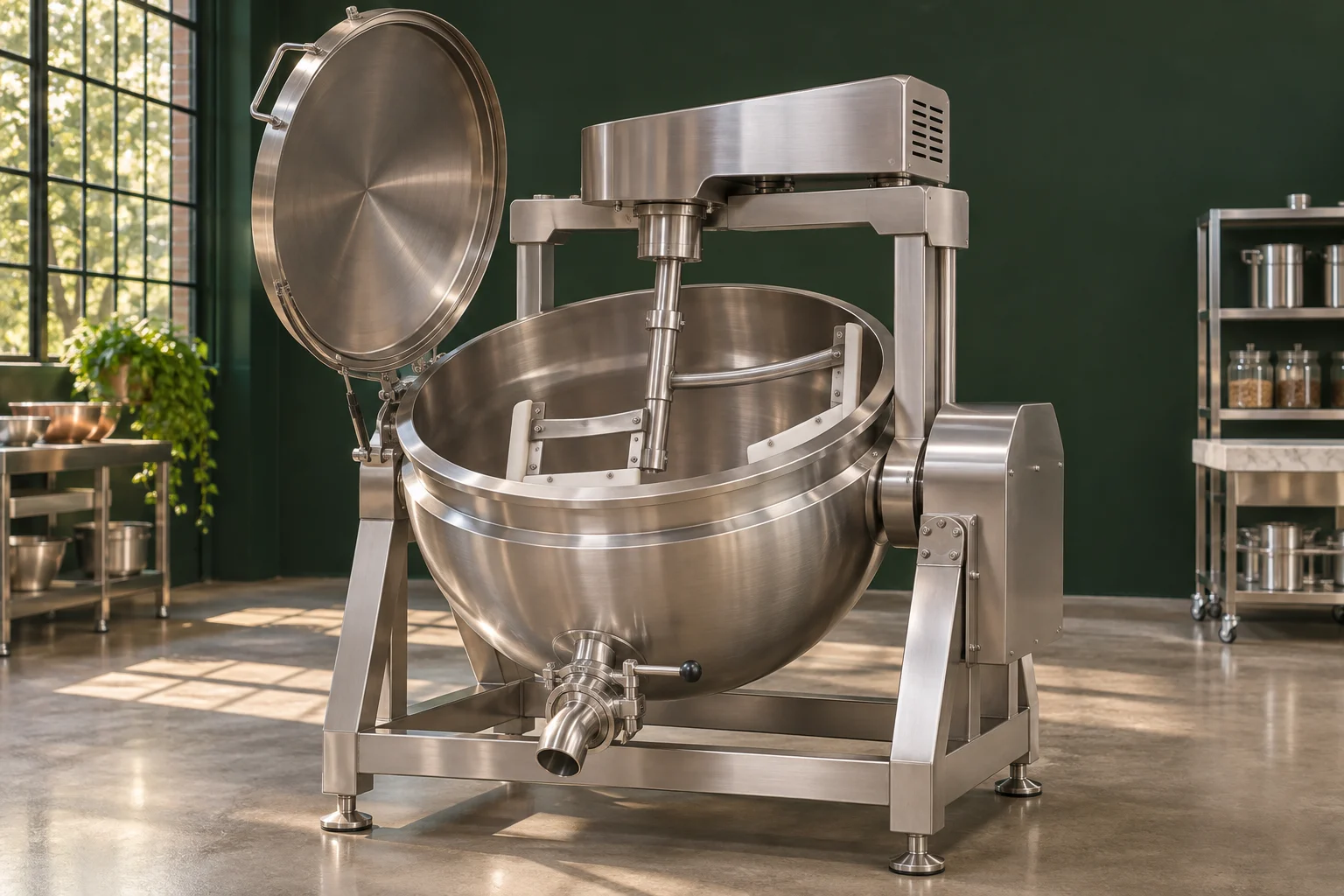
Discuss cooking equipment for soft confectionery, including toffee, caramel and chewy candy applications. Coordinate heating, agitation and discharge around the behaviour of your formulation.
Request a project discussion Explore the process ↓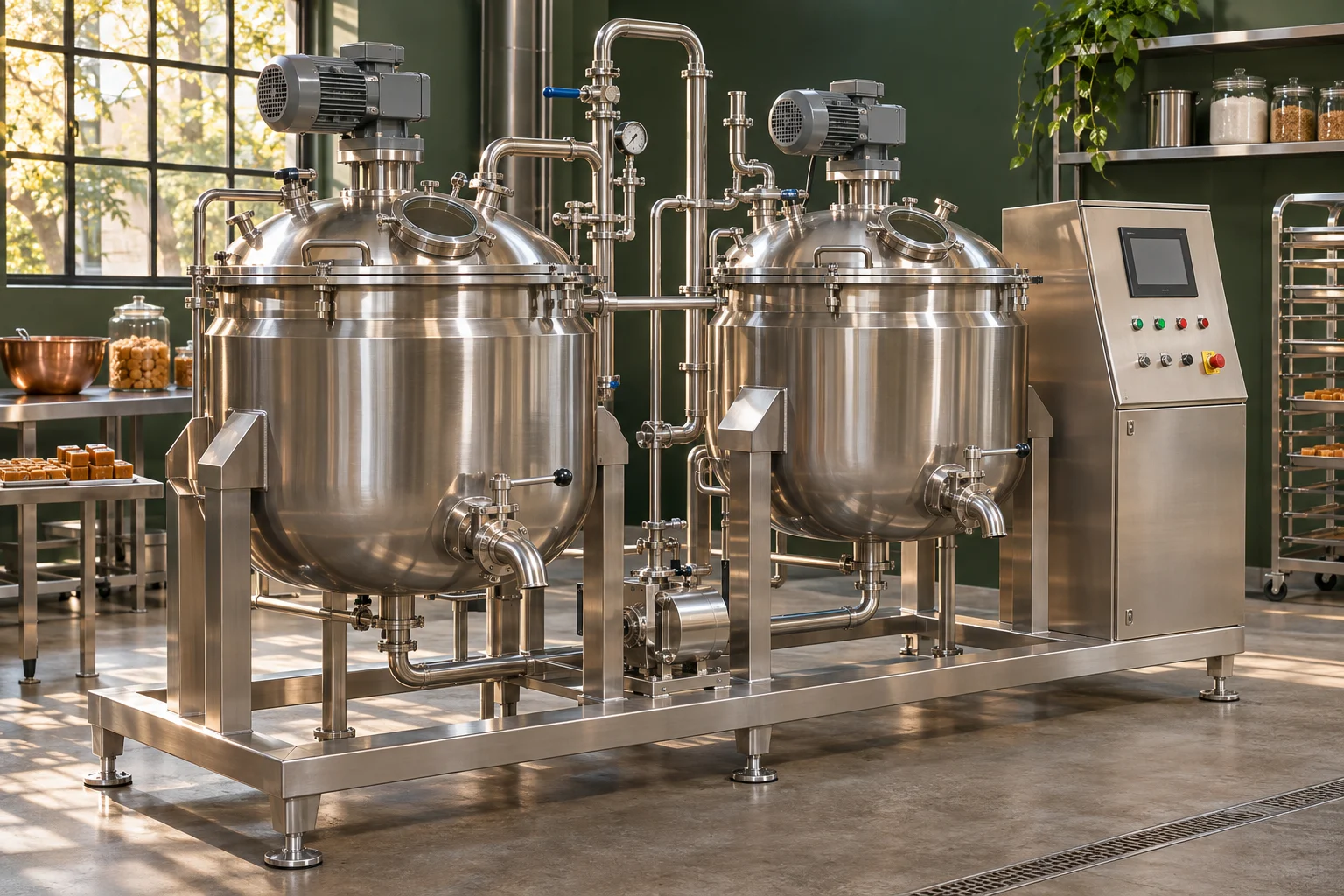
Define the order of ingredient addition, dissolution requirements and initial mixing conditions.
Develop the heating and agitation approach around solids, texture, residence time and sensitivity to heat.
Coordinate the end of cooking with holding, cooling or forming so the next process receives a manageable mass.
Review heat input and contact surfaces for sugar, dairy and fat-containing recipes.
Specify mixing around viscosity changes and the need to limit product build-up.
Consider discharge height, transfer distance, holding time and the next forming stage.
| Applications | Toffee, caramel and chewy candy bases |
|---|---|
| Sizing basis | Batch mass, cooking cycle and output target |
| Process considerations | Solids, temperature, viscosity and residence time |
| Options to review | Vacuum requirements, heating medium and transfer |
Capacity, materials, utilities, performance and available options are confirmed in an individual technical proposal. No standard performance figures are implied.
Vacuum requirements depend on the recipe, target moisture and thermal exposure. Review the formulation and intended texture before choosing the cooking arrangement.
Provide the product type, batch size, target solids or moisture, temperature profile, downstream process and available heating utilities.
Tell us what you make. We’ll discuss the equipment it needs.